

Why 2025 Is the Breakout Year for U.S. EV Exports: Global Demand, Policy Shifts, and Shipping Trends
⚡️ A Surplus of EVs, A Surge in Global Demand
In 2025, the U.S. finds itself at the epicenter of a quiet revolution: the mass export of used electric vehicles (EVs) to markets hungry for affordable, secondhand inventory. With lease cycles ending on millions of EVs and domestic resale values plateauing, exporters are turning their gaze outward, and Ship Overseas Inc is helping lead the charge.
Countries across Latin America, Africa, and Southeast Asia are rolling out EV incentives, but lack the manufacturing infrastructure to meet demand. That’s where the U.S. steps in, not just as a supplier, but as a logistical powerhouse.

🔋 Why U.S. EVs Are Prime for Export
Several factors make American EVs especially attractive to foreign buyers:
- Battery Conditioning: Mild climates in key U.S. regions mean less degradation over time.
- Clean Title Inventory: Thanks to strict insurance and leasing standards, most exported EVs come with verified histories.
- Charging Compatibility: Many U.S. EVs are easily retrofitted to match international charging standards.
- Volume Availability: With over 1.5 million EVs coming off lease in 2025, supply is no longer a bottleneck.
These advantages make American EVs ideal for international EV vehicle shipping.
🌍 Top Destinations for U.S. EV Exports
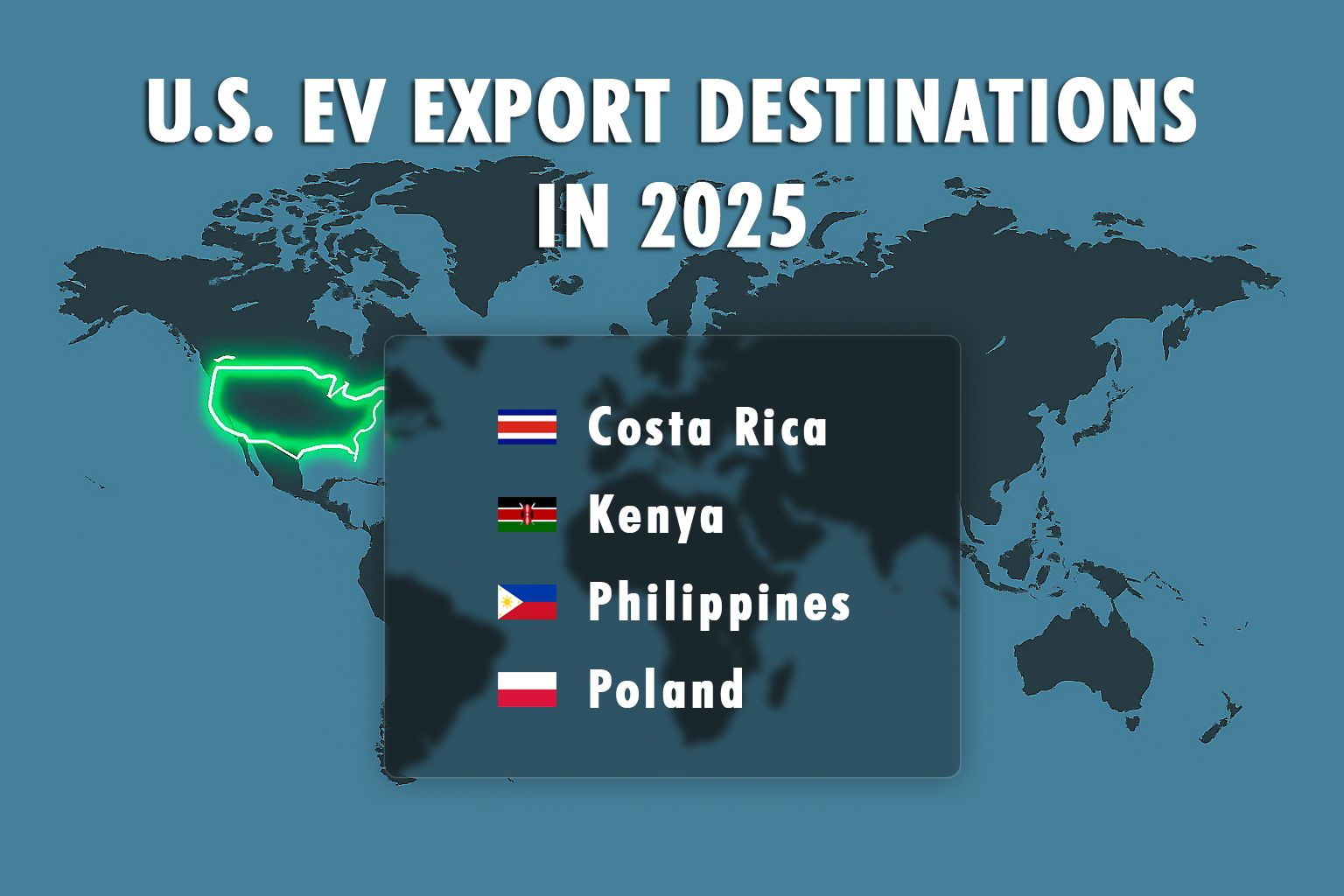
Ship Overseas Inc has seen a sharp rise in EV shipments to:
- Costa Rica: A national push for electrification has made used EVs a hot commodity.
- Kenya: Ride-share fleets are transitioning to electric, and U.S. models offer reliability and range.
- Philippines: Urban congestion and fuel costs are driving demand for compact EVs.
- Poland: EU incentives make it cheaper to import used EVs than buy new locally.
Each destination comes with its own customs requirements, port preferences, and documentation quirks, all of which Ship Overseas Inc navigates with precision.
🚢 Shipping Logistics: What Makes EVs Different
Exporting electric vehicles isn’t just about loading cars onto a ship. It requires:
- Battery Certification: Proof of safe transport conditions and charge levels.
- Hazmat Compliance: Lithium-ion batteries are classified as hazardous materials.
- Port Selection: Some terminals are better equipped for EV handling and inspection.
- Container vs. RoRo: High-value EVs often ship in containers for added protection.
Whether you’re shipping an EV vehicle overseas or managing a fleet, these logistics matter.
📈 What This Means for Dealers, Brokers, and Individual Sellers
Whether you’re a dealership with excess EV inventory or a private seller looking to tap into global demand, 2025 is the year to act. Export margins are rising, and international buyers are increasingly turning to trusted U.S. sources.
Ship Overseas Inc provides:
- End-to-end export support
- Title and customs documentation
- Inland transport coordination
- Port-to-port and door-to-door delivery options

🛠️ The Road Ahead
As more countries adopt EV-friendly policies and infrastructure, the U.S. will continue to play a central role in the global secondhand EV market. Exporting isn’t just a business opportunity, it’s a way to extend the lifecycle of clean technology and accelerate global electrification.
For sellers ready to move inventory, and buyers ready to receive it, Ship Overseas Inc is the bridge.