
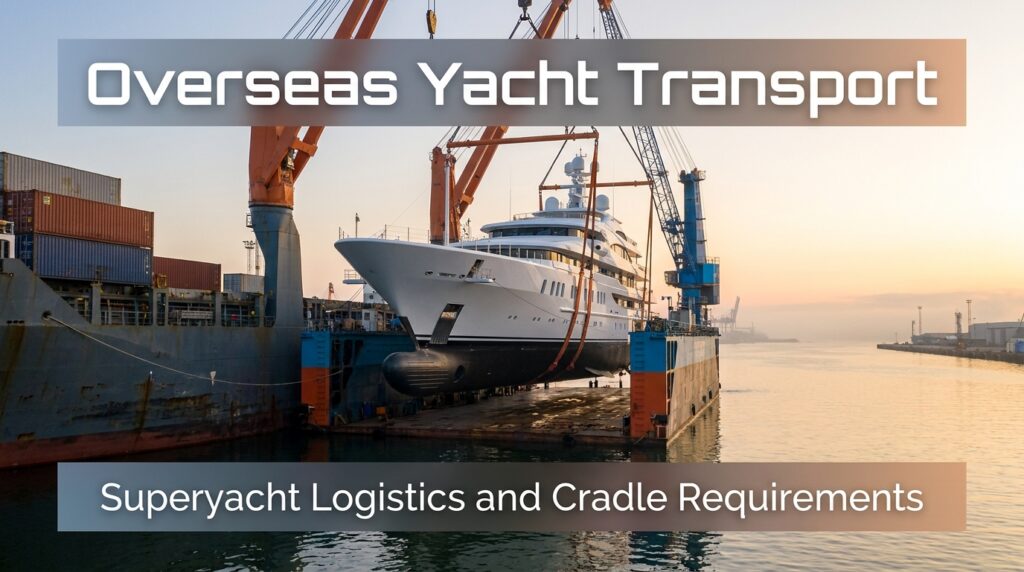
Overseas Yacht Transport: Superyacht Logistics and Cradle Requirements
Why Owners Choose Professional Yacht Transport Services
Moving a superyacht across oceans is a complex logistics project, not a simple boat ride. Hull shape, draft, height, and weight all affect how the yacht is lifted, supported, and secured on a cargo vessel. When you understand how to plan overseas yacht transport with proper superyacht logistics and cradle design, you protect your investment and reduce the risk of delays or damage.
- Superyachts often exceed local cruising ranges, so owners and captains use professional overseas yacht transport to reposition superyachts between cruising seasons instead of making long delivery passages.
- Specialized yacht carriers and lift systems allow you to ship a superyacht overseas while minimizing engine hours and crew fatigue on long routes.
Key Superyacht Logistics: Lift Methods, Routes, and Port Selection
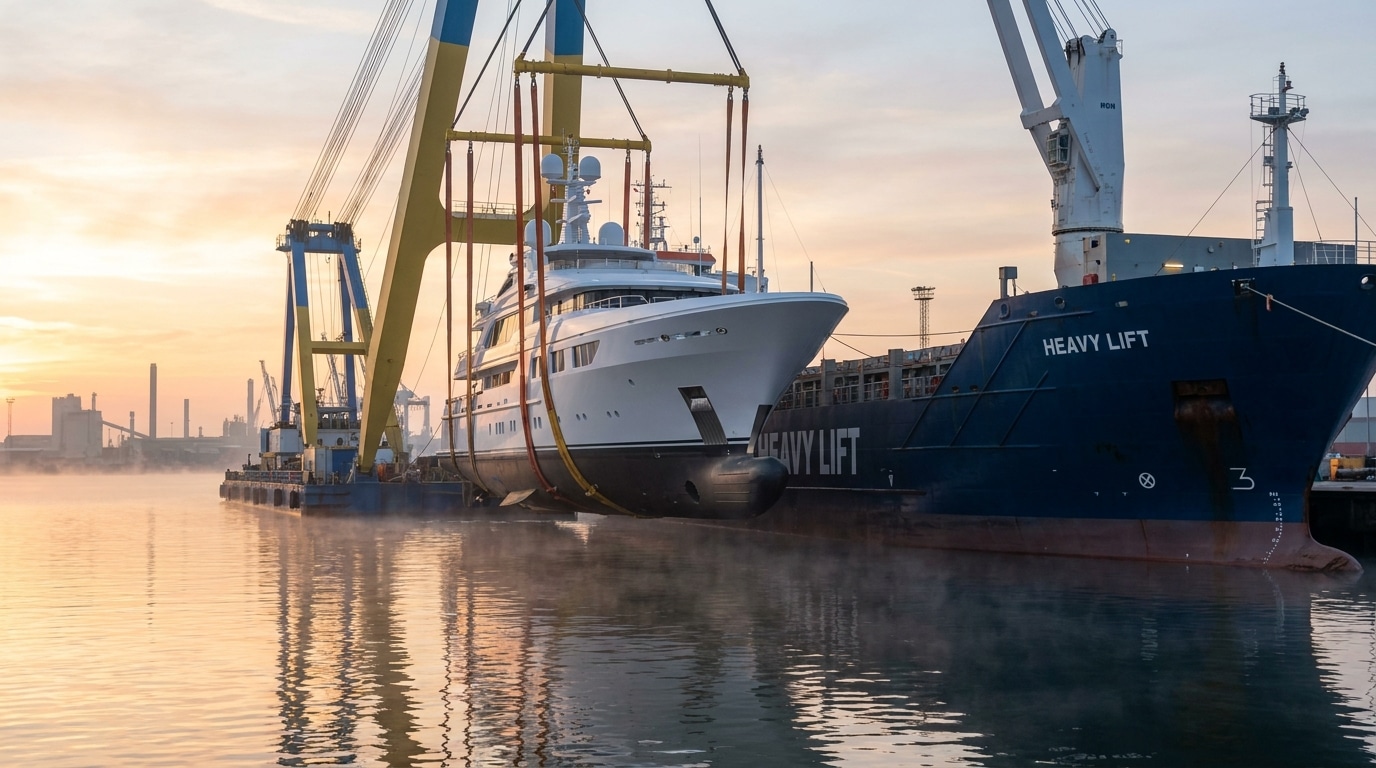
Overseas yacht transport starts with choosing the right lift method and route for the superyacht. Heavy lift ships, semi submersible float on float carriers, and deck cargo options each have different requirements for draft, beam, and hull shape. A good logistics plan helps you match superyacht size and draft to the correct overseas yacht transport method and avoid surprises at the load port.
- Heavy lift ships use slings and cranes to lift the superyacht out of the water, so you must confirm lifting points and hull strength for crane loaded superyacht transport with the builder or surveyor.
- Semi submersible carriers allow the yacht to float on and off, which can reduce lifting stress by using float on float superyacht transport for very large or delicate yachts.
- Route planning should consider weather windows, piracy risk, and port capabilities so you can choose safe and efficient routes for overseas superyacht transport between regions.
- Not every port has deep water, cranes, or clearance for superyachts, so it is vital to select load and discharge ports that can handle superyacht dimensions and draft before booking.
Cradle Requirements and Hull Support for Overseas Yacht Transport
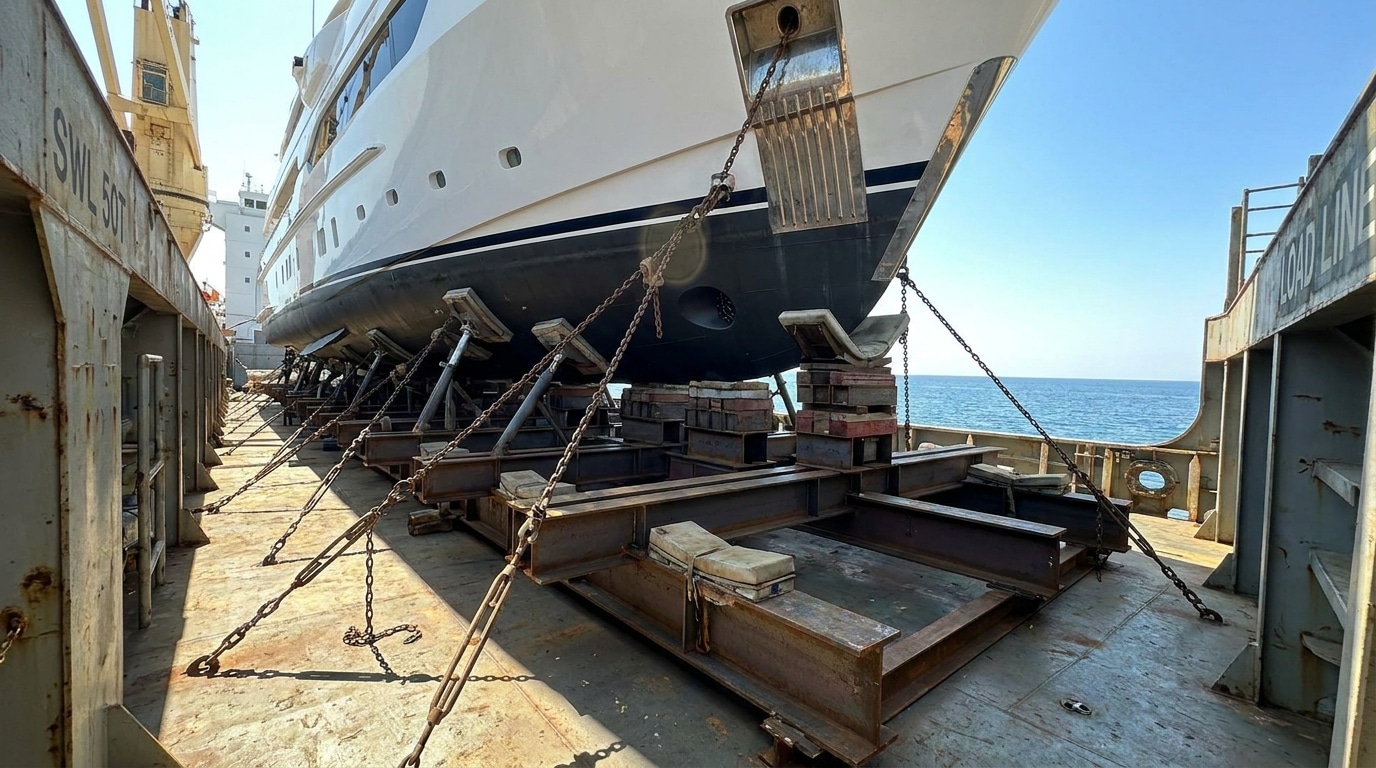
The cradle is the foundation of safe overseas yacht transport. It must match the hull shape, distribute weight correctly, and keep the yacht stable in heavy seas. Poor cradle design can cause hull distortion, gelcoat damage, or structural stress, so you need to design a superyacht cradle that supports the hull during long ocean transport with engineering level care.
- Custom cradles are often built to the yacht’s lines plan so they can match cradle pads to superyacht hull curves and structural frames instead of pressing on unsupported areas.
- Weight must be spread across multiple support points so the carrier can keep superyacht weight evenly distributed on the cargo deck and avoid point loading.
- Adjustable pads and keel blocks allow crews to fine tune cradle contact points during superyacht loading and securing for a perfect fit.
- Cradle design should include strong lashing points so the ship can secure the superyacht cradle to the deck against heavy sea motion on long crossings.
Preparing a Superyacht for Overseas Transport
Before loading, the superyacht must be prepared for ocean conditions on the deck of a cargo vessel. This includes securing loose items, protecting sensitive equipment, and documenting the yacht’s condition. A thorough preparation checklist helps you prepare a superyacht for overseas transport on a cargo vessel deck and simplifies insurance claims if anything happens.
- Remove or secure tenders, jet skis, cushions, and loose deck furniture so crews can prevent loose items from moving during superyacht deck transport in rough weather.
- Protect windows, brightwork, and sensitive surfaces with covers or shrink wrap so you can shield superyacht finishes from salt spray and cargo operations during the voyage.
- Close seacocks, check bilge pumps, and verify power arrangements so the crew can maintain basic systems safely while the superyacht is on the transport ship.
- Take detailed photos and a condition report so you can document superyacht condition before and after overseas transport for insurance and peace of mind.
Insurance, Contracts, and Choosing a Superyacht Transport Partner
Overseas yacht transport involves multiple parties, from carriers and agents to surveyors and insurers. Clear contracts and proper coverage are just as important as the cradle and lift plan. Working with a specialist helps you manage superyacht transport contracts, insurance, and logistics from port to port without missing critical details.
- Marine cargo and hull insurance should be reviewed so you can confirm insurance coverage for superyacht loading, voyage, and discharge on the transport ship.
- Transport contracts define responsibilities and limits, so it is wise to review superyacht transport terms with a maritime professional before signing.
- Experienced superyacht logistics providers coordinate surveyors, port agents, and carriers so you can work with a single point of contact for overseas superyacht transport instead of managing each party alone.

Conclusion: Plan Cradle, Logistics, and Protection for Overseas Yacht Transport
Overseas yacht transport for a superyacht is successful when logistics, cradle design, and preparation all work together. By choosing the right lift method, designing a proper cradle, preparing the yacht carefully, and securing strong insurance and contracts, you can move a superyacht with professional overseas yacht transport and engineered cradle support between cruising grounds with confidence.